

POPULISSIP
POOLHOUSE ON THE POPULIST AWAKENINGS OF THE CELEBRITY INFOTAINMENT INDUSTRIAL COMPLEX

POPULISSIP
POOLHOUSE ON CELEBRITY MEDIA’S POPULIST AWAKENING
The great Olympian glamour of Tinseltown, bestowed through the Hollywood eras since the Golden Age, has all but evaporated. But it didn’t collapse all at once. It thinned out slowly, over decades—a gradual erosion we’ve all been watching in real time.
The mystique of Hollywood didn’t stand a chance in the 21st century. Its fading aura accelerated with the rise of mass electronics. The feedback humming from the 5G towers microwaved the golden image of the movie star to a charcoal crisp.
Stardom became content. Celebrity was increasingly digested through the machinery of mass information: cell phones, screenshots, group chats, retweets, algorithms, TikToks.
The distance between public and private life narrowed, then disappeared. The two became hopelessly enmeshed. And the way the media covers itself—the so-called “entertainment” press—now reflects that collapse with a shift in tone.
In place of fawning profiles and protective mythmaking came something sharper: biting commentary, forensic attention to embarrassing and incriminating details, exposure over elevation. An attitude that once lived at the margins—snide, suspicious, openly hostile to celebrity power—has gone mainstream. What used to feel transgressive within the context of celebrity media, counter-cultural even, now reads as normal.
Celebrity coverage still sells the same product, still feeds the same appetite, but the posture has flipped. The pedestal is gone. In its place is a crowd, watching closely, waiting for something to give. Or for someone to break.
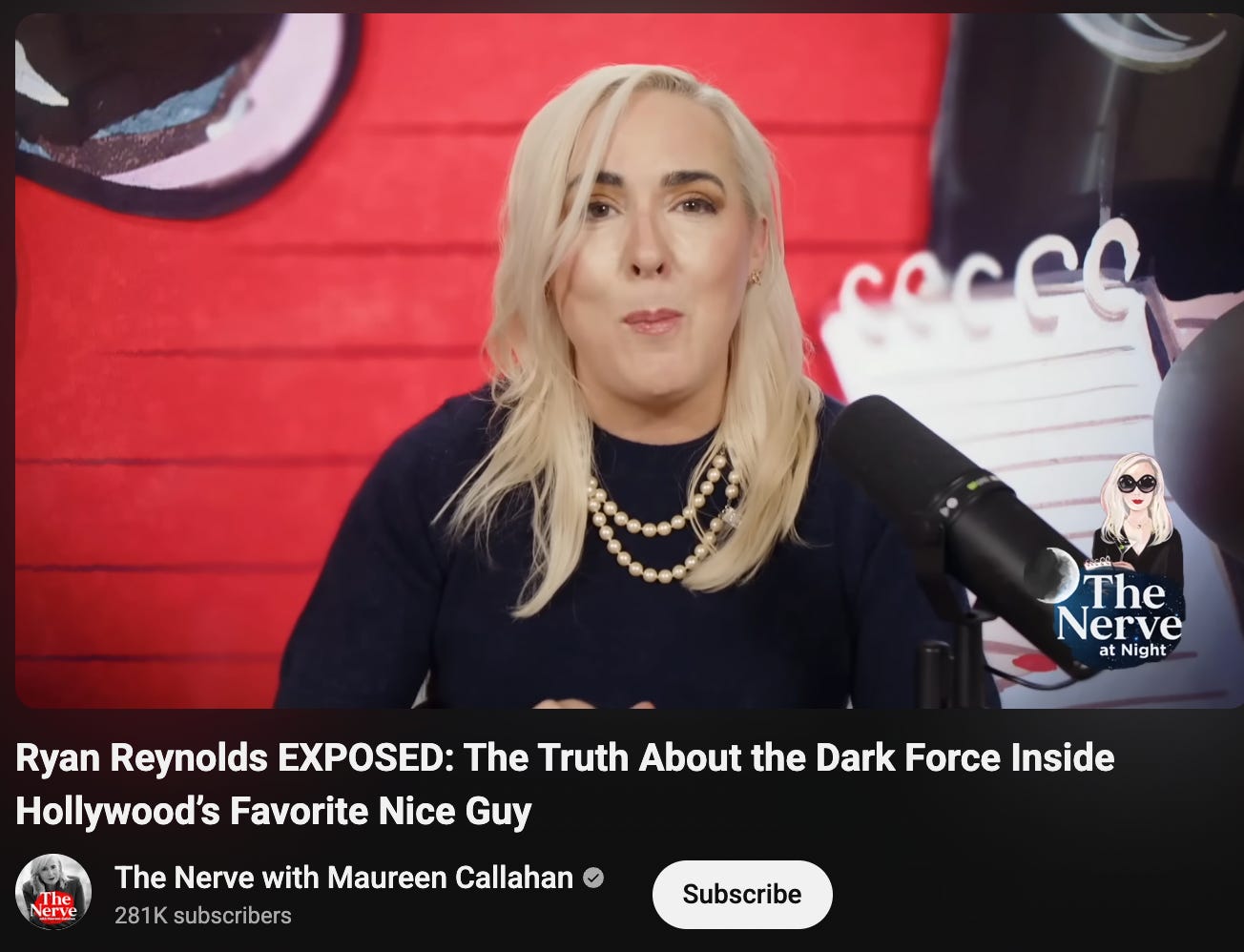
I’m going to ask you to indulge me for a second, because I need to Poolhouse tf out right now. Just for a moment. I have a name for this shift, an absurd one, admittedly. But once you see it, you’ll start spotting it everywhere.
I call it populissip.
populissip: populist-coded gossip content. Celebrity coverage stripped of awe, powered by resentment, and organized around exposure rather than aspiration.
The tonal shift didn’t come from nowhere. In the early 2000s, outlets like TMZ and blogs like Perez Hilton and MediaTakeOut pioneered a sharper, more hostile mode of celebrity coverage—less interested in access than ambush, invested in humiliation over hype, operating increasingly outside the boundaries of the old studio publicity machine.
Back then, this posture felt disreputable, even shameful. A guilty pleasure living just outside the polite borders of the entertainment press.
“Celebrity gossip once functioned like mythology. Now it feels closer to a blood ritual. The thrill isn’t in aspirational fantasy, but in the ecstatic glee of stripping the spectacle bare. Fame no longer confers protection; it signals who is eligible for scorn. To be visible now is simply to be available for dissection.” –Poolhouse
Populism found its clearest avatar — and its ritual pharmakos — in the public spectacle surrounding the Sony Pictures release of It Ends with Us. The irony of the title was hard to miss. A story ostensibly about healing and intimacy instead became a gossip-fueled proxy war over truth, power, character, and the annihilation of celebrity glitz, staged in full view of a culture already primed to distrust the famous.
Endless streams, downloads, and clicks surged with the publication of every new docket or leak — each anecdote more outrageous than the last — funneled through the algorithmic mills of the attention economy. Whatever remained of Hollywood glamour didn’t so much collapse as get fed, chunk by chunk, into the content machine.
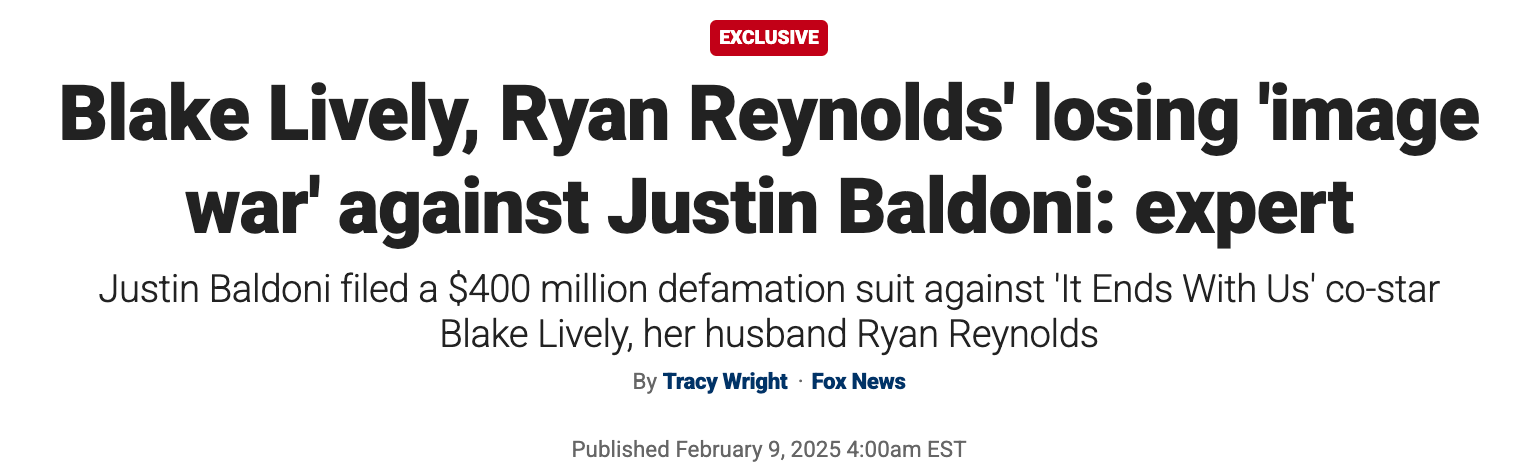
A loose constellation of allegations, denials, leaked texts, and legal maneuvering involving Blake Lively, Justin Baldoni, Ryan Reynolds, and Taylor Swift metastasized into a weeks-long obsession. Screenshots were dissected, dockets crowd-sourced, motives inferred, retracted, reasserted. Coverage from true crime, celebrity gossip, and Daily Mail-style tabloid outlets and the sprawling YouTube reaction ecosystem treated the affair less like reporting than sport — a pageant of exposure, accompanied by a gleeful gnashing of teeth.
The actual details hardly matter. Most people have already chosen a side. Studio executive emails revealed in the latest data dump speculate that Lively will never work again (I agree with the one exec who said she’ll be fine, by the way). The audience wants revenge.
The narrative around the film went viral because it captured the feverish obsessions of the moment: peeling back the curtain on power, exposing the manufacturing of cultural consent, savage mimesis and discursive cruelty, digital scapegoating, the wrath of the comments section, and (most strikingly to me), it unflinchingly reveals the absurdity of how everything actually works.
Beyond all of that, I am left with a chilly, sinking takeaway: what’s striking isn’t who lied. It’s how eager everyone was to believe that everyone lied.
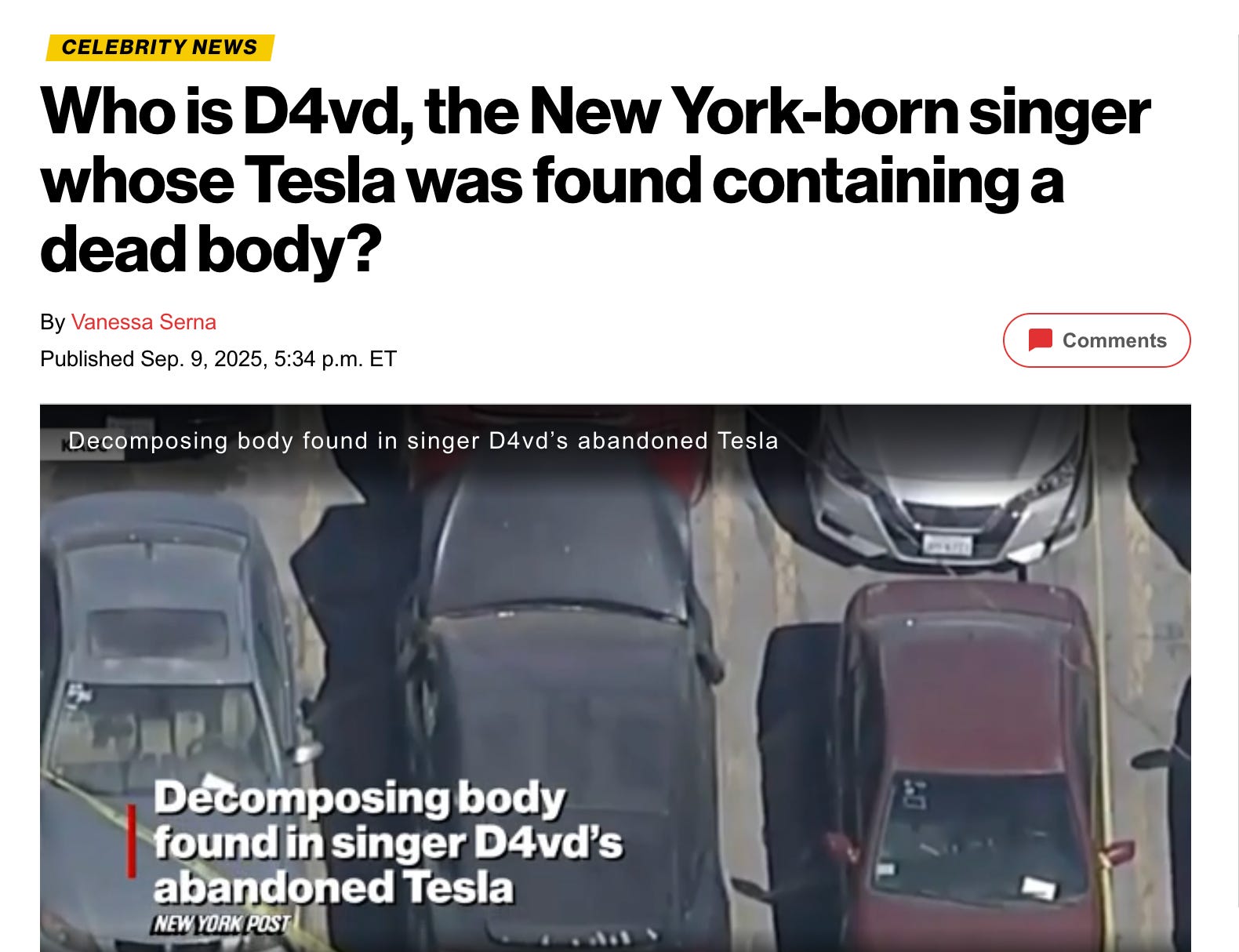
When the streamer and musical artist D4VD made headlines after cops found a 14-year-old girl’s rotting corpse in the frunk of his Tesla, he was a Gen Z icon, not a household name. That changed overnight. Within the last three months of the calendar year, he became 2025’s most searched term on Google.
This isn’t just morbid curiosity. It reflects a cultural thirst to hold the rich and famous accountable—and something deeper, older, stranger: a primal desire for public sacrifice. The social media–celebrity infotainment industrial complex is more than ready to provide it.
Celebrity gossip hasn’t disappeared, but its disposition toward elite reverence has. What’s taken its place is a hunting culture: attention without admiration, scrutiny without restraint, judgment without resolution.
The tone becomes clearest when you listen to how some of this coverage speaks about itself. In one widely viewed video reacting to the Blake Lively text messages, a YouTuber frames the moment not as gossip, but as a kind of civic reckoning:
“And finally, finally, Hollywood is being stirred up and shaken up…And how ironic that It ends with us — the people, our voices, our opinions. We get to be the judge and jury here, at least when it comes to these monsters in Hollywood…” – Mandy Magnan
The language is sweeping, moral, absolute. And—worth noting—highly emotional. It collapses distance and objectivity entirely: celebrity strangers become heroes and villains, spectatorship functions as a tribunal, and commentary becomes verdict.
This is what populist gossip looks like once it’s fully metabolized by social media. Exposure becomes justice. Attention becomes authority. A hyper-mediated intimacy supplants emotional certainty; populist rhetoric signals a kind of moral permission to engage in the catty discourse.
But discourse is just talk. It stands in for action without ever becoming it. Nothing is ever proven, and so nothing is ever resolved. Without an ending, the crowd’s desire for blood and sacrifice remains unquenched.
What this reveals is that populissip isn’t just about gossip. It also represents a parasocial fixation, fueled by the illusion of proximity and the confidence that proximity produces — made socially acceptable by the anti-elite, vaguely anti-establishment mood of the moment.
There’s something unmistakably reminiscent of Act III of Eminem’s “Stan” about it: the moment the dissonance when cult adoration shifts to entitlement, and the fan ultimately turns on the idol he once revered.
What makes populissip (sorry, I’ll stop trying to make fetch happen) feel newly legitimate is that it frames consumption as critique. It offers the pleasures of gossip while insisting they’re righteous, even necessary. But nothing actually dissolves. Power isn’t redistributed. Spectacle isn’t dismantled. It’s simply rerouted through a new moral vocabulary, one that flatters the audience by casting attention as action, and outrage as participation.
In the process, something else erodes alongside celebrity mystique. The glamour goes, but so does restraint. What remains is a constant, low-grade psychodrama: endlessly watchable, forever unresolved, where judgment substitutes for understanding, and proximity to media machinery masquerades as truth.
Populissip (oops, sorry!) doesn’t end celebrity culture. It just makes it feel more virtuous to interface with this type of content. It facilitates a sense of populist righteousness in the process of tearing to pieces the visage of the Star. But I worry it isn’t just the spectacle being destroyed in the process.
Something, something quite human, does indeed seem to be ending with us.
And I can’t help but wonder whether we’ll miss it at all when it’s finally gone.
Why do you think Blake Lively will be fine? Do you think Justin Baldoni will be fine?